How Much Does a Car Battery Replacement Cost?

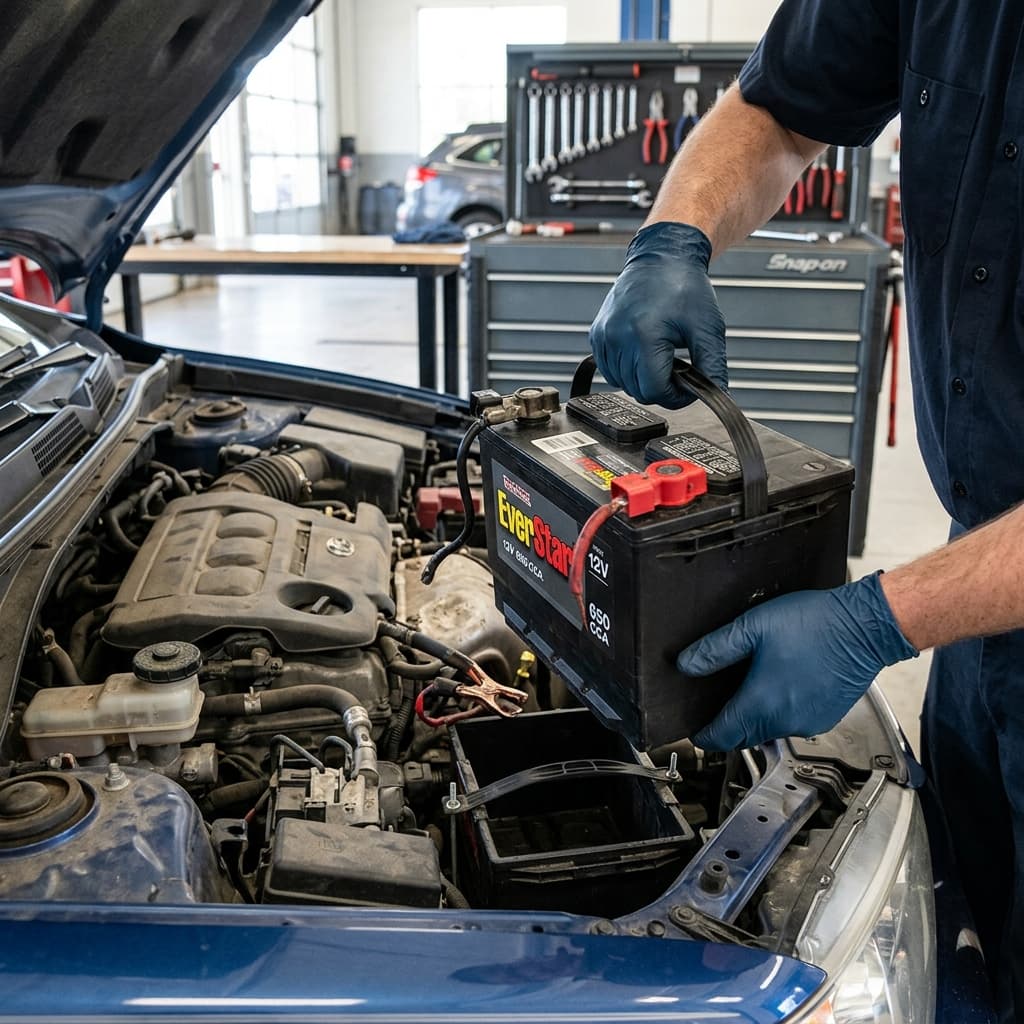
Table of Contents
If you have read our guide on how long car batteries last, you know that most standard 12-volt lead-acid batteries give you roughly 3 to 5 years of service—less in hot climates like Arizona and Florida. When your battery reaches that age and starts showing warning signs, you will need to replace it.
The good news: replacing a car battery is one of the more straightforward and predictable automotive expenses. Here is what you can expect to pay.
What Affects the Cost of a Car Battery?
Before looking at numbers, understand that battery prices are not one-size-fits-all. Several factors push the price up or down:
- Battery group size: Every vehicle requires a specific battery group size (e.g., Group 35, Group 48, Group 94R). Larger batteries for trucks, SUVs, and performance vehicles cost more than batteries for compact sedans.
- Battery type: Most passenger cars use a flooded lead-acid battery, but start-stop vehicles and some luxury cars require more expensive AGM (Absorbent Glass Mat) batteries.
- Brand and warranty: Premium brands with longer warranties (3 to 4 years free replacement) cost more upfront but can save you money over time.
- Installation location: Batteries buried under seats or in the trunk (common on BMW, Audi, and some Chrysler models) take more labor time to access and replace.
Average Car Battery Replacement Costs
Parts Cost (Battery Alone)
Prices below are typical retail ranges at auto parts stores (AutoZone, O'Reilly, Advance Auto Parts, Walmart) or online. Always verify your vehicle's required group size before purchasing.
- Standard flooded lead-acid battery (economy): $75 to $120
- Mid-range flooded lead-acid battery (most passenger cars): $120 to $175
- AGM battery (required for start-stop vehicles, some European and luxury cars): $200 to $400+
Note on AGM batteries: Vehicles equipped with start-stop technology (the system that shuts the engine off at red lights to save fuel) require an AGM battery. Using a standard flooded battery in a start-stop vehicle will destroy it in a matter of months. Always check your owner's manual for the required battery type.
Labor Cost
If you choose professional installation:
- At a national auto parts chain (AutoZone, O'Reilly, etc.): Many offer free installation when you buy the battery in-store. This is the most cost-effective option for batteries in accessible, standard locations.
- At an independent mechanic: Labor typically runs $20 to $50 for a standard, easily accessible battery.
- At a dealership: Expect to pay $50 to $100 in labor. Dealerships also sometimes charge a battery "programming" fee for vehicles that require the new battery to be registered with the car's computer system (common on BMW, Mercedes-Benz, and Volkswagen).
Total Replacement Cost (Parts + Labor)
| Battery Type | DIY (Parts Only) | Professional Install | |---|---|---| | Standard flooded (economy) | $75–$120 | $95–$170 | | Standard flooded (mid-range) | $120–$175 | $140–$225 | | AGM battery | $200–$400+ | $250–$500+ |
Can You Replace a Car Battery Yourself?
For most vehicles, yes—and it is one of the most beginner-friendly DIY repairs available. The basic process:
- Turn the engine off and let it cool.
- Locate the battery (usually in the engine bay, but sometimes in the trunk or under a seat).
- Disconnect the negative cable first (black, marked with a minus sign), then the positive cable (red, marked with a plus sign). Reversing this order can cause a spark.
- Remove the battery hold-down clamp.
- Lift the old battery out. Note: car batteries are heavy—typically 25 to 50 pounds.
- Clean any corrosion off the terminals with baking soda and water.
- Drop in the new battery, reconnect positive first, then negative.
- Secure the hold-down clamp.
When not to DIY: If your vehicle requires battery registration (BMW, Mercedes, Audi, VW) or has a battery in a hard-to-reach location, professional installation is worth the modest extra cost.
Battery Registration: What Is It?
Some modern vehicles—particularly German-brand cars—require a technician to electronically register the new battery with the vehicle's engine control module (ECM). This tells the car's charging system the exact specifications of the new battery so it can charge it correctly.
If your car requires registration and you skip this step, the alternator may overcharge or undercharge the new battery, dramatically shortening its life. Dealers typically charge $30 to $80 for this procedure. Independent shops with the right diagnostic software can do it for less.
Where to Buy a Replacement Battery
- National auto parts chains (AutoZone, O'Reilly, Advance Auto Parts): The most popular option. Staff will test your old battery for free and install the new one at no extra charge for most vehicles.
- Walmart: Often has the lowest prices on standard batteries. No installation service.
- Dealership: Highest prices but ensures OEM-spec batteries and correct registration on European/luxury vehicles.
- Online (Amazon, Walmart.com): Prices can be competitive, but you pay separately for installation, and batteries are heavy to ship.
Signs You Actually Need a New Battery (Not Just a Jump)
Before spending money on a new battery, make sure a battery is truly the problem. A failing alternator can drain even a new battery. Most auto parts stores will test your battery and charging system for free.
- Battery is more than 4 years old
- Slow engine crank that gets worse in cold weather
- Headlights dim at idle
- Battery warning light is illuminated on the dashboard
- Battery failed a load test at the parts store
For the full list of warning signs, see our guide on how long car batteries last and the signs of a dying battery.