How Much Does a Spark Plug Replacement Cost?

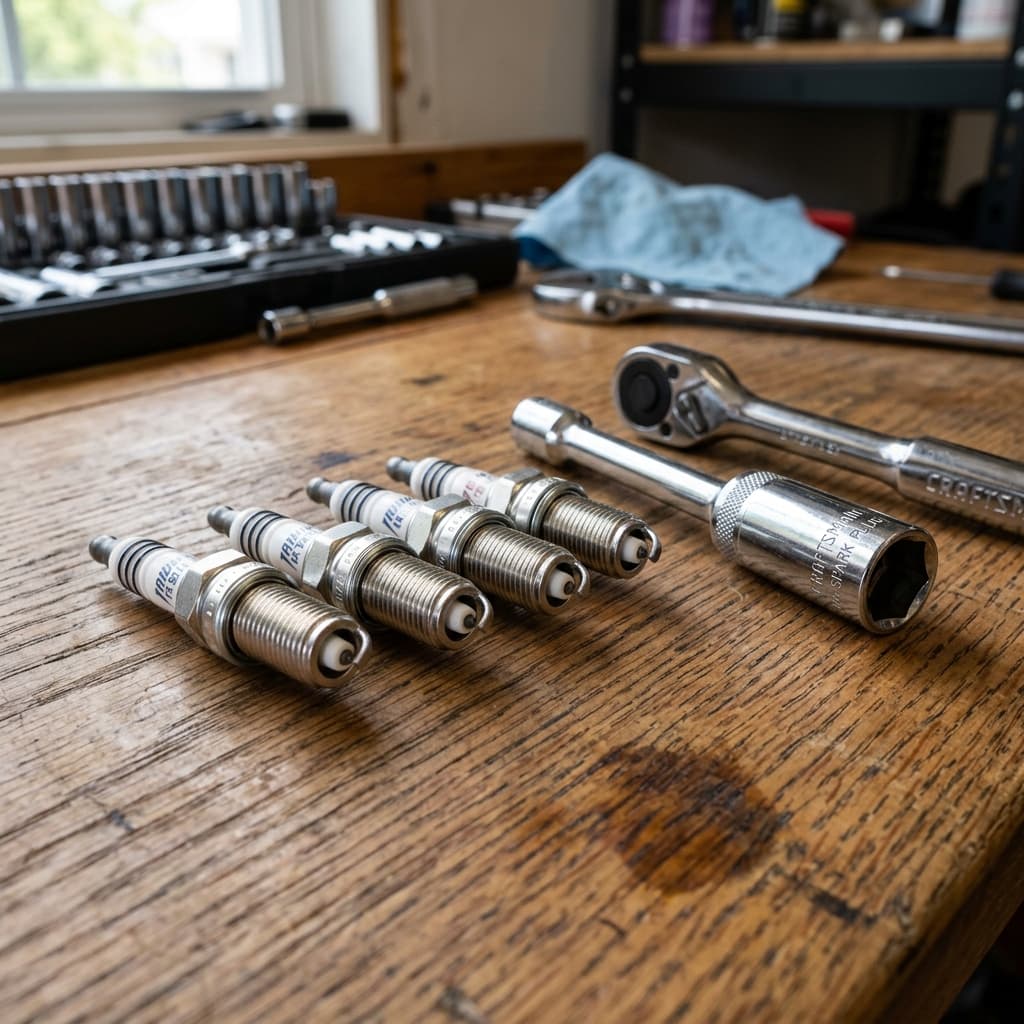
Table of Contents
Spark plugs are small parts with a large influence on how well your engine runs. When they wear out, you may notice rough idling, sluggish acceleration, reduced fuel economy, or difficulty starting the car. Replacing them is a straightforward service—but the total cost varies significantly depending on what type of plugs your vehicle requires and how accessible they are.
If you are unfamiliar with the signs of failing spark plugs, read our companion guide on how long spark plugs last and the symptoms of wear before reviewing costs.
What Factors Affect the Price?
1. Type of Spark Plug
The single biggest cost variable is the type of spark plug your vehicle's engine requires. You cannot substitute a cheaper plug type without risking poor performance and potential engine issues.
- Conventional (copper) spark plugs: Least expensive, but also wear the fastest. Primarily found on older vehicles.
- Platinum spark plugs: Mid-range price and longevity. Used in many late-model vehicles.
- Iridium spark plugs: Most expensive per plug, but last the longest. Standard on most modern vehicles from the factory.
Always use the plug type specified in your owner's manual.
2. Number of Cylinders
Most passenger cars have 4, 6, or 8 cylinders, and each cylinder requires one spark plug. A 4-cylinder Honda Civic needs 4 plugs; a V8 Ford F-150 needs 8. Some older and performance engines use two plugs per cylinder, which doubles the parts cost and installation time.
3. Accessibility
On most 4-cylinder and many V6 engines, the spark plugs sit on top of the engine and are relatively easy to reach. On some transversely-mounted V6 engines (common on minivans and front-wheel-drive SUVs), the rear bank of plugs is extremely difficult to access, dramatically increasing labor time. On some vehicles, the intake manifold must be removed to reach the back plugs.
How Much Do Spark Plugs Cost?
Parts Cost Per Plug
| Plug Type | Cost Per Plug | |---|---| | Conventional (copper) | $3–$10 | | Platinum | $10–$20 | | Iridium | $15–$35 | | Premium or OEM iridium (luxury/European) | $30–$60+ |
For a typical 4-cylinder vehicle with iridium plugs, the parts cost for a full set of four runs roughly $60 to $140. For a V8 truck or SUV, expect $120 to $280 for iridium plugs alone.
Labor Cost
Labor varies widely based on engine configuration and accessibility:
- 4-cylinder, easy access: $50 to $100 labor
- V6 with good access: $80 to $150 labor
- V6 with difficult rear-bank access: $150 to $350 labor
- V8 truck or performance engine: $100 to $250 labor
Total Replacement Cost by Vehicle Type
The ranges below combine parts and labor and represent typical U.S. market prices. Dealerships generally charge at the higher end; independent mechanics at the lower end.
| Vehicle Type | Plug Type Needed | Total Estimate | |---|---|---| | 4-cylinder economy car (Toyota, Honda, Hyundai) | Iridium | $100–$250 | | 4-cylinder pickup truck | Iridium | $120–$275 | | V6 sedan or SUV | Platinum or Iridium | $150–$400 | | V8 full-size truck or SUV | Iridium | $200–$500 | | European luxury vehicle (BMW, Audi, Mercedes) | OEM Iridium | $250–$600+ |
Important disclaimer: These are general market estimates based on typical U.S. prices. Your actual quote may differ based on your specific vehicle, local labor rates, and whether you go to a dealership or an independent shop. Always get a written estimate before authorizing work.
Can You Replace Spark Plugs Yourself?
On many 4-cylinder and inline engines, yes—spark plug replacement is a manageable DIY job for someone with basic mechanical confidence. You will need:
- A spark plug socket (typically 5/8" or 9/16", with a long extension)
- A ratchet
- A torque wrench (recommended to avoid over-tightening)
- Anti-seize compound (optional, but helps prevent plugs from seizing into the head)
- Dielectric grease for the boots
Critical DIY rules:
- Never replace plugs on a hot engine. Let it cool completely for at least an hour to prevent thermal shock to the cylinder head.
- Replace one plug at a time. This ensures you never accidentally mix up the ignition wire or coil boot connections.
- Do not overtighten. Over-tightening can strip the threads in the aluminum cylinder head, turning a $150 job into a $500 repair.
- Use the exact plug specified. Never substitute copper for iridium or vice versa.
If your vehicle has a V6 with difficult rear-bank access or requires significant disassembly, professional installation is worth the cost.
Does Replacing Spark Plugs Actually Improve Fuel Economy?
Worn spark plugs that are misfiring cause incomplete combustion—fuel enters the cylinder but is not fully burned. This waste lowers your miles per gallon. Replacing plugs that have genuinely degraded past their service interval can restore fuel economy to the manufacturer's specification.
However, if your plugs are only halfway through their service life (for example, 40,000 miles on an 80,000-mile iridium plug), you are unlikely to see a measurable improvement from early replacement. Follow the schedule in your owner's manual and your car maintenance schedule, and replace only when the service interval or symptoms warrant it.