How Much Does Brake Pad Replacement Cost?
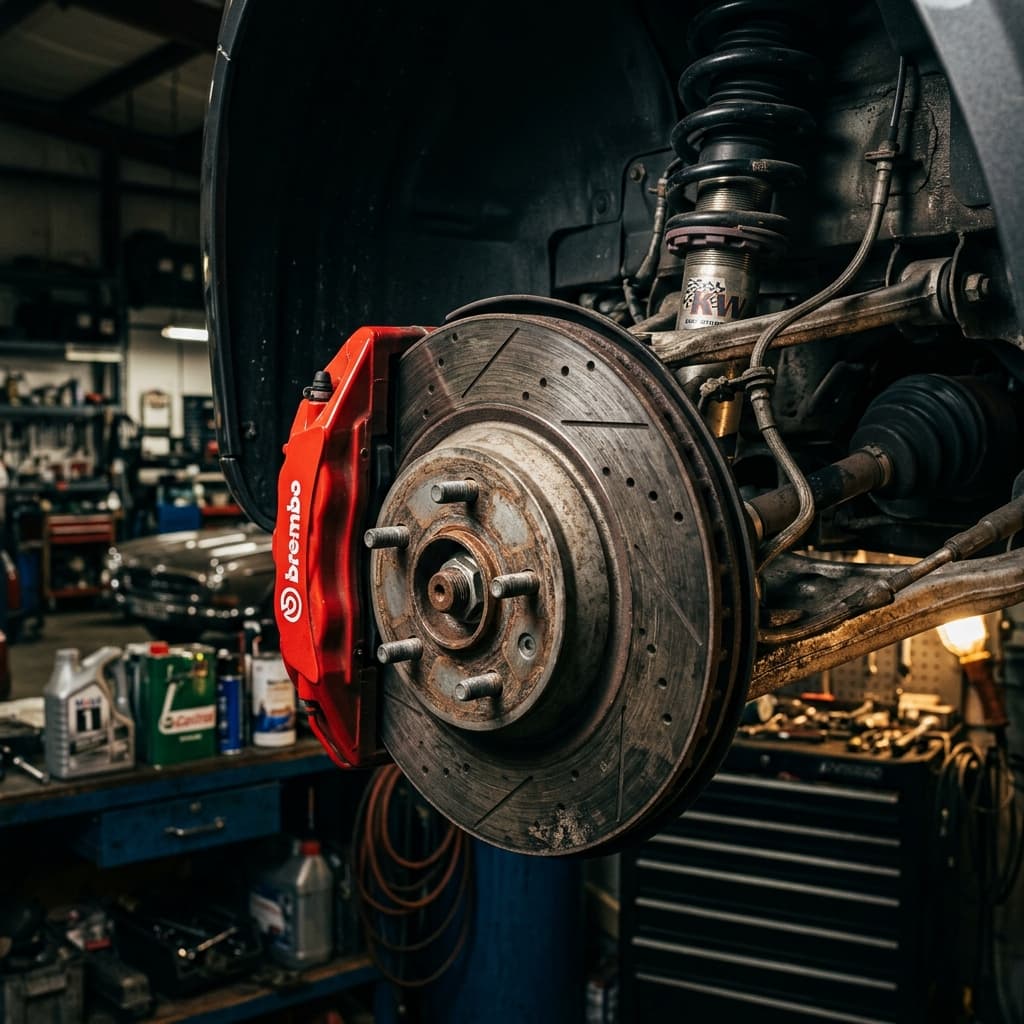
Table of Contents
Replacing worn brake pads is an inevitable part of car ownership. Because brakes are your vehicle’s most critical safety system, this is one repair you can never afford to ignore.
While brake jobs are very common, the pricing can be confusing. Here is a breakdown of what a typical brake pad replacement costs in the U.S. and the factors that influence the final estimate.
Average Brake Pad Replacement Costs (Parts vs. Labor)
There is no single universal price for a brake job, as costs vary heavily based on your location and vehicle. However, based on U.S. industry averages, here is what you can generally expect:
- Brake Pads Only (Per Axle): You can expect to pay roughly $150 to $300 to replace the brake pads on one axle (either the two front wheels or the two rear wheels).
- Parts: $40 to $100 for the brake pads.
- Labor: $100 to $200 (typically 1 to 1.5 hours of labor).
If you are replacing the brake pads on all four wheels at the same time, expect the cost to double (roughly $300 to $600).
Do You Need to Replace the Brake Rotors Too?
Brake rotors are the heavy metal discs that the brake pads clamp down on to stop the car. Over time, the immense friction and heat can cause the rotors to wear down, warp, or develop deep grooves.
Many mechanics recommend replacing the rotors at the same time as the pads to ensure perfectly smooth braking. If your rotors need replacing, it will significantly increase the cost.
- Pads and Rotors (Per Axle): Replacing both the brake pads and the brake rotors usually costs between $300 and $600 per axle.
Factors That Affect the Final Price
When comparing estimates, keep these variables in mind:
1. Vehicle Make and Model (Luxury vs. Economy)
The cost of parts for a standard economy car (like a Honda Civic or Toyota Corolla) is relatively inexpensive. However, if you drive a luxury vehicle, a heavy-duty truck, or a performance sports car, the specialized brake pads and massive rotors will cost substantially more.
2. Dealership vs. Independent Mechanic
Taking your car to a dealership ensures factory-trained technicians and Original Equipment Manufacturer (OEM) parts, but dealerships typically charge higher hourly labor rates. Local, independent repair shops often have lower labor rates and may offer high-quality aftermarket brake pads that lower the total bill.
3. Brake Pad Material (Ceramic vs. Semi-Metallic)
Premium ceramic brake pads are quieter, produce less brake dust, and often last longer than standard semi-metallic pads. However, ceramic pads cost more upfront.
Front vs. Rear Brakes: Is There a Difference?
When you brake, the momentum of the car shifts forward. Because of this, the front brakes handle up to 70% of the vehicle's stopping power.
As a result, front brake pads are usually larger, work harder, and wear out much faster than rear brake pads. It is very common to replace your front brakes twice as often as your rear brakes.
4 Signs Your Brake Pads Are Worn Out
Always consult your car maintenance schedule to keep track of your brake wear, but watch out for these warning signs:
- High-Pitched Squealing: Most brake pads have built-in "wear indicators"—small metal tabs that intentionally scrape against the rotor and squeal when the pad is dangerously thin.
- Grinding Sounds: If you hear a harsh, metallic grinding noise, the pad material is completely gone, and metal is grinding directly on metal. This will destroy your rotors rapidly.
- Vibration in the Steering Wheel: If your car is shaking while driving, specifically when you press the brake pedal, your rotors are likely warped.
- Spongy Brake Pedal: If the brake pedal feels soft or sinks to the floor, you may have a brake fluid leak or air in the brake lines—a severe safety hazard.
When Is Brake Work an Urgent Safety Hazard?
If your brakes are grinding, your brake pedal goes to the floor, or your car pulls aggressively to one side when braking, do not continue driving the vehicle. Call a tow truck. Paying for a tow is always cheaper than causing a high-speed collision because your vehicle couldn't stop in time.