How Often Should You Replace Your Engine Air Filter?
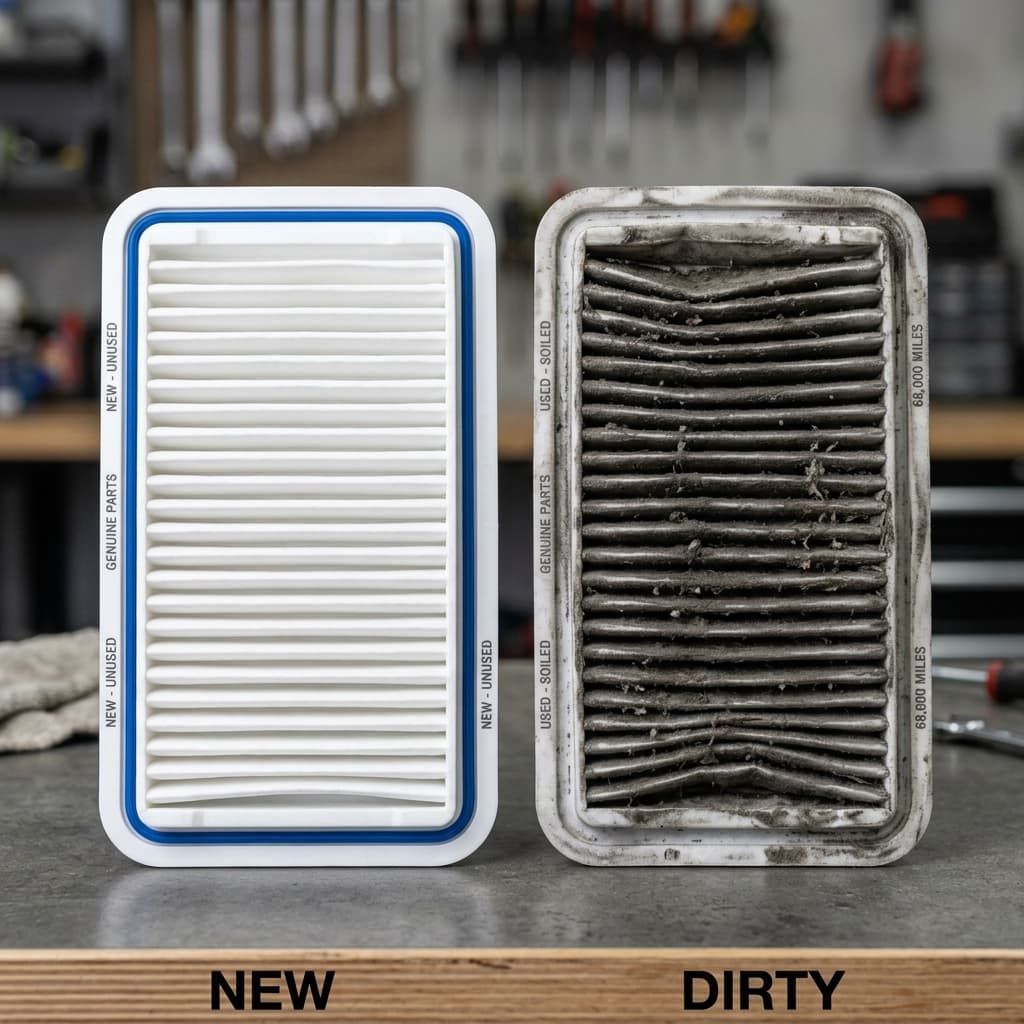
Table of Contents
When you take your car in for a routine oil change, it is extremely common for the mechanic to pull out a dusty, gray filter and recommend a replacement.
But how do you know if you actually need a new engine air filter, or if you can wait another 10,000 miles? Here is everything you need to know about when and why to replace it.
What Does the Engine Air Filter Actually Do?
To generate power, your engine requires a precise mixture of fuel and oxygen. For every gallon of fuel burned, the engine pulls in thousands of gallons of air from outside.
The engine air filter acts as the lungs of your car. It sits inside a plastic housing under the hood and captures dust, dirt, pollen, sand, and insects, preventing these abrasive contaminants from entering the engine's internal cylinders.
Typical Manufacturer Replacement Guidelines
There is no single universal replacement interval for engine air filters, as it varies significantly by manufacturer.
Most automakers recommend replacing the engine air filter every 15,000 to 30,000 miles. You should always consult your specific car maintenance schedule found in your owner's manual for the most accurate guidance for your make and model.
How Driving Conditions Affect Filter Lifespan
The manufacturer's mileage recommendation assumes "normal" driving conditions. If you drive in "severe" conditions, you will need to replace the filter much more frequently.
Heavy Traffic and Smog
If you spend most of your time in stop-and-go city traffic with poor air quality and heavy exhaust from other vehicles, your filter will trap more soot and carbon, darkening much faster.
Dirt Roads and Dusty Climates
Driving regularly on unpaved dirt roads, or living in dry, desert environments, forces the filter to catch massive amounts of sand and dust. In these conditions, a filter may need replacing every 10,000 miles or less.
4 Signs You Have a Dirty Engine Air Filter
While a slightly dirty filter won't instantly ruin your car, a severely clogged filter restricts airflow to the engine, which can cause noticeable drivability issues. Note: These symptoms vary greatly by vehicle and severity.
1. Visual Inspection (It looks filthy)
The most reliable sign is a visual check. A brand new filter is usually bright white or yellow. If you hold a flashlight behind the filter and light cannot pass through the deep grey or black pleats, it is clogged and needs replacing.
2. Decreased Fuel Economy
When an engine doesn't get enough air, older vehicles may compensate by running "rich" (using too much fuel). However, modern vehicles have computers that automatically adjust the fuel mixture, so you may not notice a massive drop in MPG unless the clog is severe.
3. Sluggish Acceleration
If airflow is severely restricted, the engine cannot breathe properly under heavy load, causing the car to feel sluggish or unresponsive when you try to merge onto the highway.
4. Check Engine Light
In extreme cases, the restricted airflow can alter the air-fuel ratio enough to trigger an emissions code, causing your check engine light to illuminate.
How to Inspect and Replace It Yourself (It’s Easy!)
Replacing an engine air filter is one of the easiest DIY maintenance tasks. It requires no special tools and usually takes less than 5 minutes.
- Open the hood and locate the black plastic air filter box (usually near one of the fenders).
- Unsnap the metal clips or unscrew the housing.
- Lift the old filter out and inspect it.
- If it's heavily clogged, drop the new filter in, ensuring it sits flat in the housing.
- Secure the clips or screws, and you are done.