Why Is My Car Shaking While Driving? 9 Common Causes


Table of Contents
A car that suddenly starts vibrating, shaking, or shuddering is an unnerving experience. Modern vehicles are engineered to ride smoothly, so when you feel a noticeable shake in the steering wheel, the seat, or the brake pedal, it is a clear sign that a mechanical component requires attention.
The best way to diagnose the problem is to pay close attention to when the shaking occurs.
Diagnosing the Shake: When Does It Happen?
To narrow down the culprit, ask yourself: Does the shaking happen only at high speeds? Only when you press the brakes? Or does it happen while you are accelerating from a stop?
Shaking at Highway Speeds (Tires & Wheels)
If your car drives smoothly around town but begins to shake or vibrate when you hit highway speeds (typically between 50 and 70 mph), the issue is almost always related to your tires or wheels.
1. Unbalanced Tires
As tires wear down, the distribution of weight around the tire can become uneven. Even a fraction of an ounce of imbalance can cause severe vibrations at high speeds. Tire balancing (where small weights are added to the wheel rim) is required to fix this.
2. Uneven Tire Wear
If you have skipped your routine tire rotations, your tires may develop "cupping" or uneven wear patterns. Note that rotating the tires will not fix an existing severe vibration, but it is critical for preventing it in the first place.
3. Bent Wheels or Rims
Hitting a large pothole or a curb can bend the metal rim of your wheel. A bent wheel cannot roll perfectly flat, resulting in a rhythmic shaking that gets faster as your speed increases.
Shaking While Braking (Brake Issues)
If the car is smooth while cruising but vibrates violently as soon as you press the brake pedal, the braking system is to blame.
4. Warped Brake Rotors
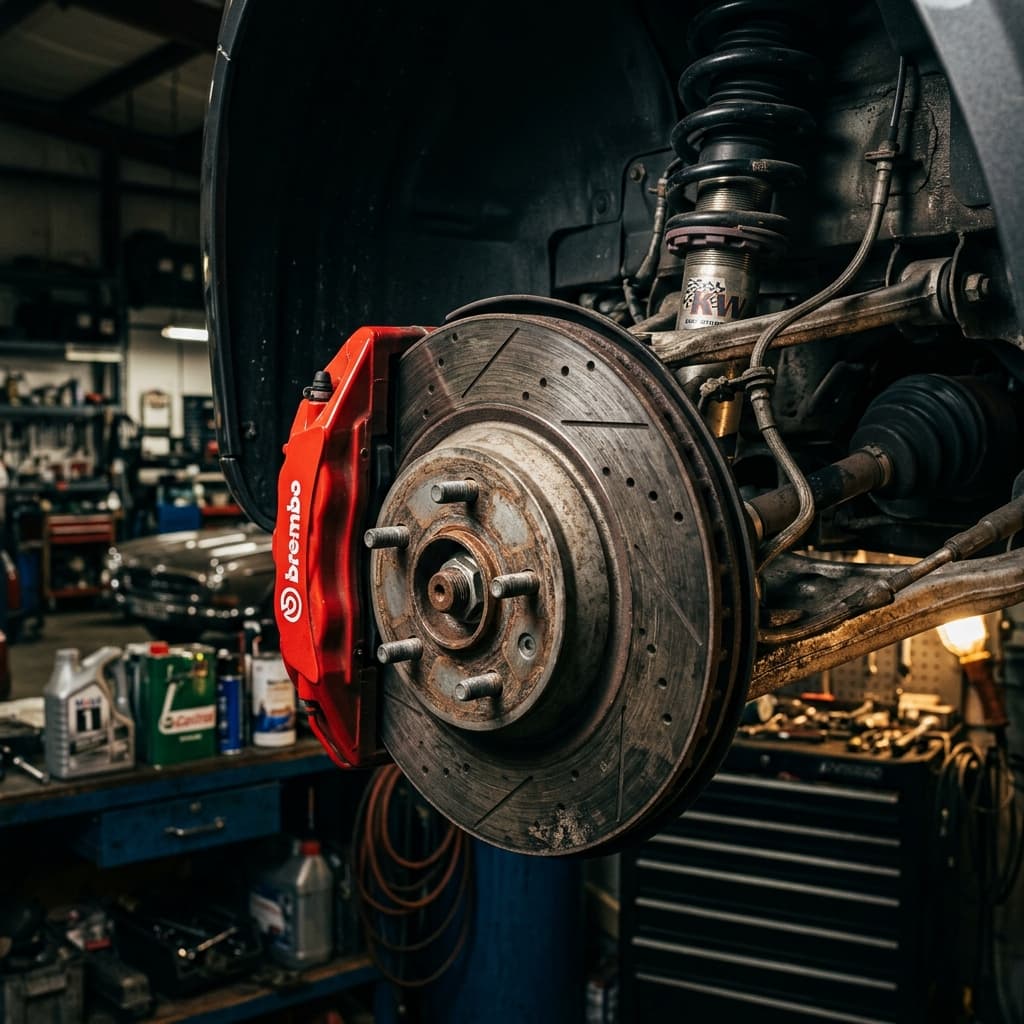
The most common cause of shaking during braking is a warped brake rotor. Rotors are the metal discs that the brake pads clamp onto. Under immense heat and heavy braking, these rotors can warp or develop uneven thickness. When the pads press against a warped rotor, the vibration transfers directly into the steering wheel and brake pedal.
5. Worn Brake Pads
Severely worn brake pads can also cause harsh vibrations and grinding sounds. If you suspect this is the issue, you can learn more about average brake pad replacement costs to prepare for the repair bill.
Shaking While Accelerating (Drivetrain)
If the car shudders specifically when you press the gas pedal to accelerate, the engine is likely struggling to transfer power to the wheels efficiently.
6. Worn CV Joints or Axles
On front-wheel-drive vehicles, CV (Constant Velocity) joints connect the transmission to the wheels. If the protective rubber boot tears and dirt gets inside, the joint will fail, causing a severe shudder under acceleration.
7. Bad Motor Mounts
Motor mounts secure the engine to the car's frame and absorb the engine's natural vibrations. If a mount cracks or breaks, the engine can shift slightly under hard acceleration, transferring its vibration through the entire cabin of the car.
Shaking at Idle (Engine Issues)
If you are stopped at a red light and the whole car is vibrating or idling roughly, the issue is coming directly from the engine's combustion process.
8. Misfiring Spark Plugs
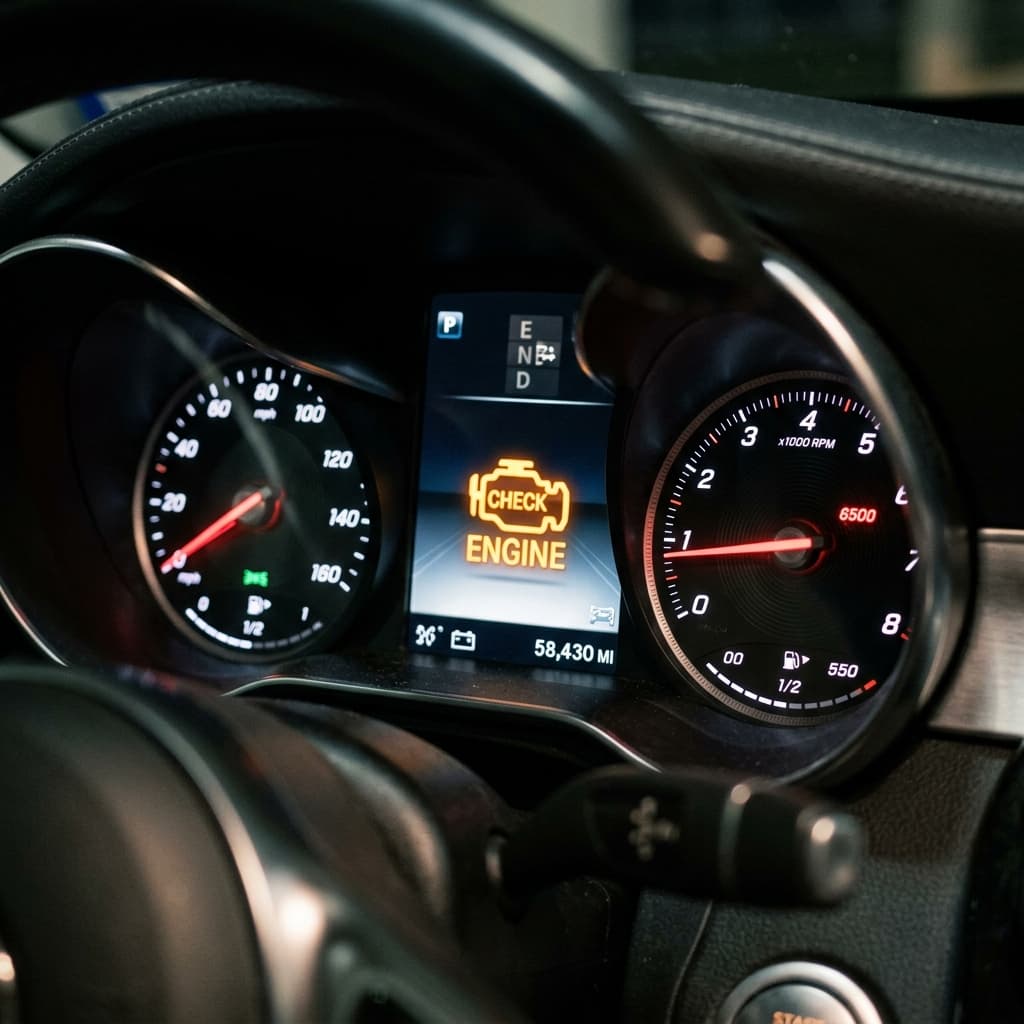
If your engine is misfiring, it will vibrate noticeably at idle. This is often accompanied by a flashing check engine light. Worn or fouled spark plugs are a primary cause of rough idling.
9. Dirty Fuel Injectors
If your fuel injectors are clogged, the engine isn't receiving a steady spray of fuel, causing a stutter or shake when the vehicle is stopped.
Is It Safe to Drive a Shaking Car?
Minor vibrations (like a slightly unbalanced tire at 70 mph) are generally safe to drive on temporarily, though they will cause premature wear to your suspension if ignored. However, severe shaking—especially shaking that occurs while braking or under acceleration—should be inspected by a professional mechanic immediately, as it often points to critical safety components like brakes or axles.