Why Is My Check Engine Light On? Common Causes & What to Do

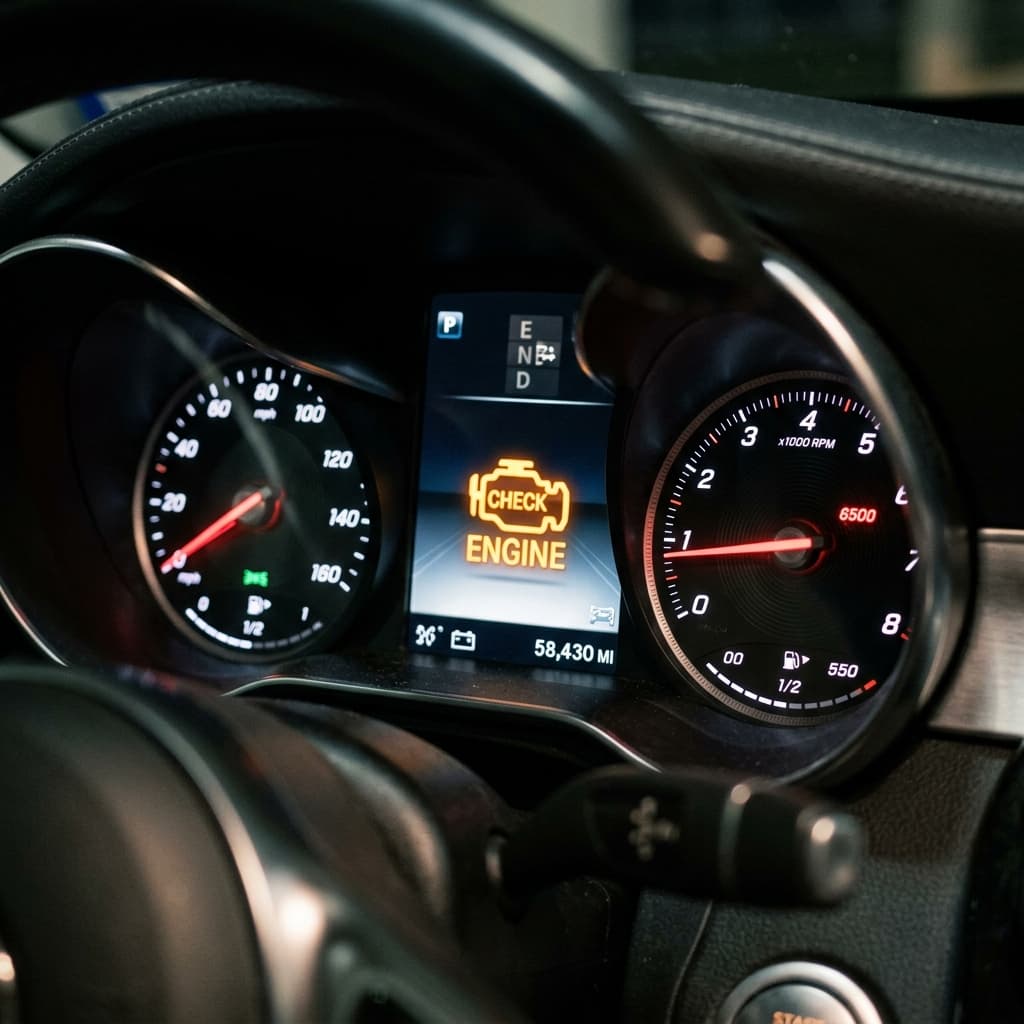
Table of Contents
Seeing the orange check engine light illuminate on your dashboard is one of the most stressful experiences for any driver. It is the primary way your vehicle communicates that its onboard computer system has detected a malfunction.
Before you panic, it's important to understand what the light means, the common culprits behind it, and when you should immediately pull over versus when you can safely drive to a mechanic.
Solid vs. Flashing Check Engine Light (What's the Difference?)
The very first thing you must do when the check engine light comes on is observe how it is behaving.
When Is It Safe to Drive? (Solid Light)
If the check engine light is solid and steady, the problem is typically not an immediate, catastrophic emergency. A solid light means the system has detected an issue that needs to be addressed, but the vehicle is generally safe to continue driving to your destination or directly to a repair shop.
When Should You Stop Immediately? (Flashing Light)
If the check engine light is flashing or blinking continuously, this indicates a severe engine misfire. A misfire dumps unburned fuel directly into the exhaust system, which can rapidly overheat and destroy your catalytic converter—a highly expensive repair. If you see a flashing light, you should safely pull over as soon as possible, turn off the engine, and have the vehicle towed to a mechanic. Do not continue driving.
5 Most Common Causes of a Check Engine Light
Because all modern vehicles (since 1996 in the U.S.) are equipped with standardized On-Board Diagnostics (OBD-II), the check engine light can be triggered by dozens of different issues. Here are five of the most frequent offenders:
1. Loose or Damaged Gas Cap
Surprisingly, a loose gas cap is one of the most common reasons a check engine light turns on. The gas cap seals the fuel system to maintain proper pressure and prevent fuel vapors from escaping into the atmosphere. If you recently fueled up, try tightening the cap until it clicks. It may take a few miles of driving for the light to turn off.
2. Faulty Oxygen (O2) Sensor
The O2 sensor measures the amount of unburned oxygen in your exhaust system. If it fails, your car’s computer cannot correctly balance the air-to-fuel ratio, leading to decreased fuel economy and increased emissions.
3. Failing Catalytic Converter
The catalytic converter reduces harmful exhaust emissions. While they are designed to last the lifetime of the vehicle, they can fail prematurely if other issues (like ignored misfires or a bad O2 sensor) are left unresolved.
4. Worn Spark Plugs or Wires
Spark plugs are responsible for igniting the air-fuel mixture in the engine cylinders. Over time, they wear out and can cause the engine to misfire, triggering the light. If you suspect this is the issue, read our guide on how long spark plugs last to learn about replacement intervals.
5. Mass Airflow (MAF) Sensor Issues
The MAF sensor measures the amount of air entering the engine so the computer can inject the correct amount of fuel. A dirty or failing MAF sensor can cause rough idling, stalling, and a check engine light.
How to Read OBD-II Diagnostic Codes
When the check engine light comes on, the vehicle's computer stores a specific diagnostic trouble code (DTC).
You do not need to guess what is wrong. Mechanics use an OBD-II scanner to read this code (e.g., "P0300" for a random multiple misfire). You can also purchase an inexpensive OBD-II scanner yourself or visit many auto parts stores (like AutoZone or O'Reilly) where they will often scan your car for free.
What to Do Next (Step-by-Step)
- Check your dashboard: Is the light solid or flashing? If flashing, stop driving.
- Check your gas cap: Tighten it if you recently bought gas.
- Scan for codes: Get the OBD-II code read by a parts store or a mechanic to pinpoint the exact issue.
- Follow your maintenance schedule: Refer to your vehicle's car maintenance schedule to see if you are overdue for a major service that could be causing the issue.
- Get an estimate: If repairs are needed, ask for an itemized estimate to understand your repair costs.
Never ignore a check engine light for months on end. Even if the car feels fine, driving with an active check engine light can turn a minor $50 sensor problem into a $2,000 catalytic converter replacement.